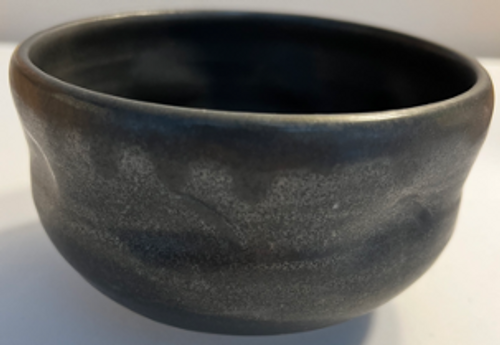
Chawan: Ki-Seto (黄瀬戸) Chawan with Oribe Green Ash Accents
Write a Review

Chawan: Ki-Seto (黄瀬戸) Chawan with Oribe Green Ash Accents
- SKU:
- CHW-553
Seto–Mino Region (Gifu Prefecture), Studio Kiln 「窯」, Late Shōwa–Heisei (c. 1970s–1990s)
Overview
A refined Ki-Seto chawan embodying the quiet interplay between feldspathic glaze and natural ash-driven copper green flow. The bowl presents a warm, pale yellow ground—softly luminous—interrupted by descending rivulets of olive and deep green, recalling the spontaneous aesthetic language of Oribe ware.
This piece reflects the revival traditions of the Seto–Mino ceramic centers, where studio kilns explored classical Momoyama surfaces through modern firing control.
Identification
- Item Number: CHW-553
- Type: Chawan (Tea Bowl)
- Name: Ki-Seto chawan with Oribe-style green glaze accents
- Kiln / Region: Seto–Mino (Toki / Seto area, Gifu Prefecture)
- Period: Late Shōwa to early Heisei (c. 1970s–1990s)
- Mark: Impressed 「窯」 (gama / kiln)
Description
The bowl is wheel-thrown in a balanced cylindrical form with a softly flared lip. The glaze composition is distinctly Ki-Seto: a feldspathic yellow base exhibiting subtle tonal warmth, over which ash and copper-bearing glaze flows create organic vertical accents.
The green drips—irregular and naturally pooled—introduce asymmetry characteristic of Oribe influence. The result is a hybrid aesthetic often seen in late 20th-century Mino studio production, where Ki-Seto and Oribe vocabularies intersect.
Physical Characteristics
- Diameter: 12.0 cm
- Height: 7.3 cm
- Weight: 235 g
- Clay Body: Fine-grained buff stoneware with light grog
- Glaze: Feldspathic Ki-Seto base with copper-green ash runs
- Form: Cylindrical with subtle flare
- Foot: Precisely trimmed, exposed clay, centered seal
Interior
The interior displays a softly pooled translucent glaze with a faint iridescent sheen under light—indicative of controlled oxidation firing. The surface remains smooth yet subtly textured, offering an ideal tactile experience during whisking.
Foot & Mark
The foot is sharply defined and neatly cut, revealing the natural clay body. At the center is an impressed seal reading:
「窯」 — “Kiln”
This is a studio kiln mark, not a personal signature, and is consistent with cooperative or independent kiln production in the Seto–Mino region.
Attribution
Unidentified studio kiln, Seto–Mino region (Gifu Prefecture), likely produced within a cooperative or teaching kiln environment active during the late 20th century.
The mark 「窯」 aligns with known kiln-mark practices rather than individual authorship.
Aesthetic Interpretation
The bowl expresses a restrained wabi sensibility:
- The yellow ground evokes sun-warmed earth
- The green rivulets suggest moss or rain on clay walls
- The balance between control and spontaneity reflects tea aesthetics rooted in natural imperfection
Use in Tea Ceremony
Suitable for:
- Usucha (薄茶) — excellent daily-use bowl
- Year-round use, especially late summer through autumn
- Informal and rustic settings
Market Position
A representative example of late 20th-century Ki-Seto revival ware with Oribe influence, valued for aesthetic quality rather than named authorship.